





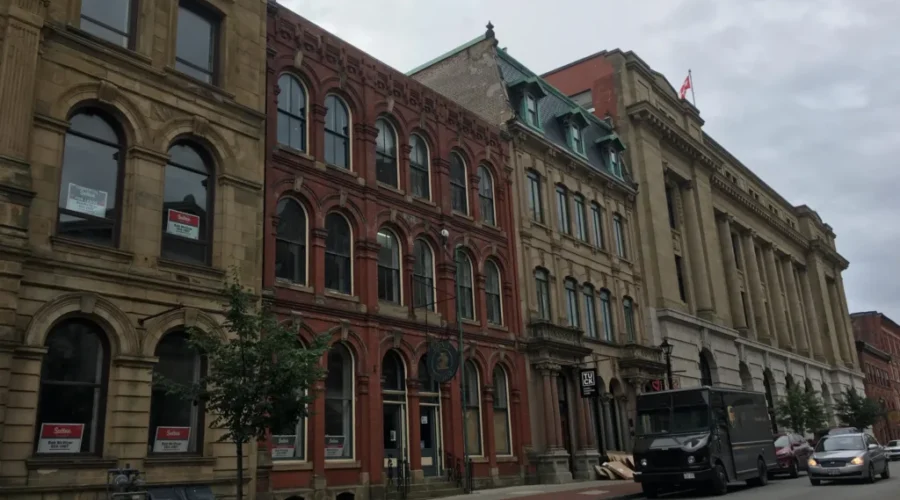
The city is making some changes to its heritage bylaw.
The bylaw—which guides exterior alterations to heritage properties—was thought by homeowners and developers to be too strict and inflexible.
Emma Sampson, the heritage officer, explains the bylaw helps protect historic buildings in the city.
“For most external work you do on your property, it requires a heritage permit, and that’s to ensure that the work that you’re doing is appropriate to the building in style and in materials,” she said.
The first phase of the new updates will allow for more freedom around the non-visible parts of a property, like decks, fences and side doors.
“Changes that won’t impact the form of the building. So it’s allowing people to make choices based on their budget, without impacting fully the character of their building in these places where you can’t really see the changes,” she said.
She says work on non-visible facades will now be exempt from needing a heritage permit.
Phase one will also streamline the process for demolition permits and the sale of heritage homes.
Sampson says phase two of the new changes have to do with new developments in heritage conservation areas, and the application process involved.
“We are increasing the range of styles, so if you want to build a more traditional looking building, absolutely; if you want to build a more contemporary building, sure. The more contemporary your building becomes, we ask a little bit more of the applicant,” she explained.
She says those more modern buildings will now require a Heritage Impact Statement from developers, and in some cases, a third-party review.
“We’re not looking for people to build duplicates of heritage buildings. It’s not heritage best practice, and it’s certainly not something that we think would benefit a vibrant, growing community,” she said.
Sampson says there are over 600 heritage properties around the city, spread across 11 heritage conservation areas.
“Six of those are on the central peninsula, and the one I think that most people are familiar with is Trinity Royal, which is most of our commercial core and some residential streets,” she said.
Sampson says the bylaw is crucial to preserving historic buildings by helping heritage homeowners maintain their properties, and modernizing it makes things easier for everyone.
“We have a very comprehensive program that we offer to heritage property owners for the appropriate maintenance and upkeep of their buildings. So this ranges from grants from a maximum to $750 annually to $7,500 annually,” she said.
The changes to the Heritage Bylaw will go before Common Council on Sept. 9th.

