




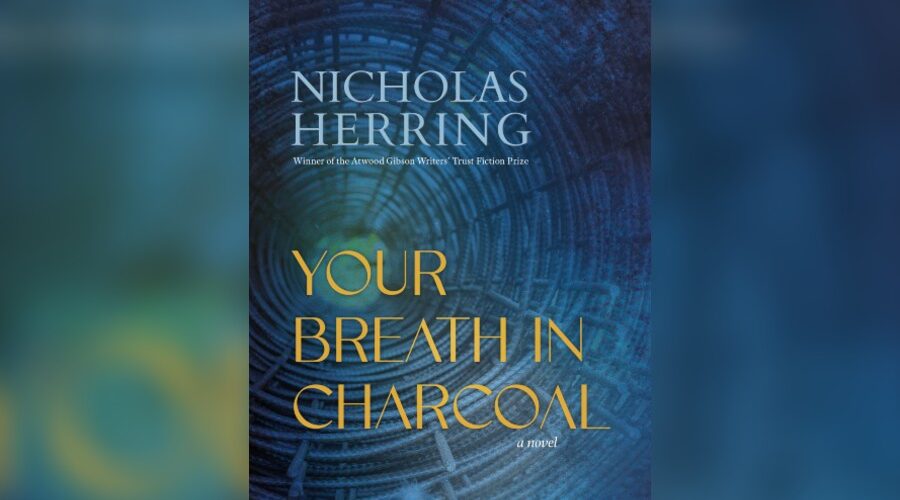
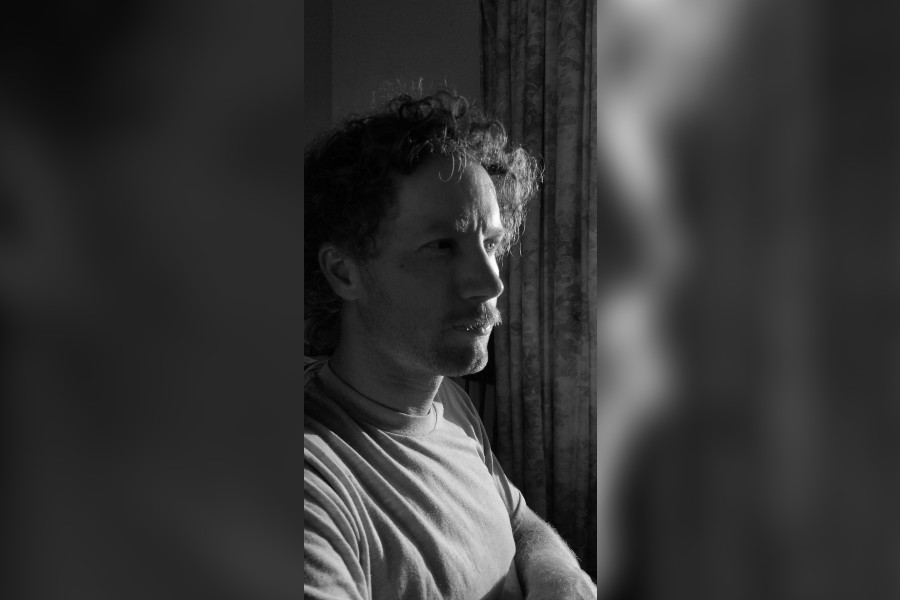
A P.E.I. writer wanted to create an epic for Maritimers, and now his book is up for the biggest literary award in the country.
Nicholas Herring is one of five finalists for the Giller Prize, a $100,000 annual award that highlights some of the best in Canadian writing.
He was nominated for his second novel, Your Breath in Charcoal, and is still processing the news.
“Where does one begin? I don’t know. It’s pretty crazy Yeah, it’s crazy,” he says.
“It’s very confusing and very exciting. It doesn’t even really feel real to me, honestly.”
The award gives $100,000 to the winner and $10,000 to each finalist. The winner will be announced Nov. 16.
The other four nominees this year are:
- Tara Gereaux for Wild People Quiet
- Michelle Good for Eliza Sunshine
- Nazanine Hozar for The Small Ones
- Patmeena Sabit for Good People
An East Coast Odyssey
Herring says he wanted to write an epic for Maritimers, a journey story like Homer’s Odyssey. He has spent time in the trades, tying rebar, and fishing. He wanted to bring that experience forward with working-class, East Coast characters.
“I don’t see anybody writing about this stuff and I know this stuff pretty well. So I may as well try.”
He says it is kind of “bewildering” that he wrote a book about Islanders tying rebar in the late 90’s and he’s up for the Giller Prize.
“It’s kind of a mad thing. Like, all these other books, they deal with war and [other things], And then I said, man, I got a book about two idiots just trying to figure their lives out. It’s crazy.”
Early on, there are some easy tells that the story begins in Saint John, N.B., when the narrator mentions listening to Country 94.1, one of Acadia Broadcasting’s own radio stations. O’Leary’s pub is another local staple found in the pages.
Long journey
“It’s been a long and winding journey” to get here, Herring says.
He studied creative writing at St. Jerome’s University and wrote some short stories for a collection, but thankfully, as he says, he did not publish any of them because they were not very good.
But when it came to writing novels, he had to fail a few times before he figured out how to do it.
He went into a creative writing master’s program at the University of Toronto, which he says is pretty prestigious, accepting only a few people a year.
His thesis at the end of that program was a novel that took a year to write but which he felt was not good.
After all that work, it was soul-crushing, he says.
He felt similar for a few years, having written some short stories and a pair of novellas that went unpublished.
It took until about 2019, while he was walking along a beach with his wife, when he told her he wanted to try it again, to write a novel.
Just a year later he had Some Hellish.
His first book earned the Atwood Gibson Writers’ Trust Fiction Prize and was published through Goose Lane, the same publisher as his Giller-Prize-nominated second book.
When Herring started writing seriously, he wanted to be a master of his craft, to see how good he could make himself become, he says.
“I’m not saying I’ve become an astronaut and I’m far, far away from that, but to receive this kind of recognition for my second book is… Yeah, it’s everything.”
Stood out from the start
Gibson started with Goose Lane in 2006, and though they have had some books make the long list for the Giller Prize, this is the first to make the final five, she says.
Before she had even looked at his first book, fiction editor Bethany Gibson says there was something different about him.
Typically, writers send in pitch package with a synopsis, bio, a sample of writing, and a cover letter, along with other publishing credits.
But she recalls Herring just a sent a one-line cover letter along with the manuscript for Some Hellish.
“He said, ‘This is a book about a fisherman named Herring.’ And that was it,” says Gibson.
“And I thought, okay, this is either going to be really not very good or very good. And it was very good.”
It is hard to describe how a book like that one jumps out when you read between 275 and 300 submissions every year. You get a keen eye for literary quality, she says. And in this case, it “was just the most extraordinary experience.”
“I started reading and I thought, oh yeah. He knows what he’s doing.”
When his second book came around, she knew it was going to be good.
It was no surprise at all to seem him nominated and then make the shortlist for the prize, she says.
Above all, she says, the Giller Prize also puts attention onto a book in a way that almost nothing else can, no marketing campaign, no reviews, nothing.
Turning point
Herring says he feels like he has been caught up in something, now that he has been nominated for the award.
Diong all these interviews feels validating and humbling, he says, but now he needs to find a way to launch into writing full-time. That is the dream.
“I’m sick of working for other people and I’m not going to get any younger,” says Herring.
“There are writers in this country who write full-time. And that I made the shortlist for the biggest literary award in the country should be, to me, an indication that I’m like, I’m on the right track at the very least, right?”