





David Candy, an instructor with DCI Instructions, has been in high demand lately with his program for firefighters on how to deal with electric vehicle (EV) fires.
“I’ve been getting calls constantly, from Canada and in the States, as more and more EVs hit the road. I’ve been pleased to see fire departments that are being proactive to the change,” Candy said.

David Candy is a retired paramedic who now teaches training courses for first responders. Photo: DCI
In recent months, he has traveled across New Brunswick and Nova Scotia to deliver his course to various fire departments, most recently traveling to Nova Nova Scotia’s South Shore, where he delivered his course to firefighters from the Bridgewater, Dayspring, Northfield, and Tri-District departments.
In general, Candy says EV fires pose no greater risk than fires involving traditional internal combustion engines, but there are key differences that firefighters need to be aware of.
“With a standard vehicle fire departments would generally bring a few hundred gallons of water, but for an EV fire research indicates it could take up to 2,300 gallons to extinguish,” he said.
With a difference that large, Candy says being able to identify an EV early is huge, “We spend a significant portion of the program on how to identify EVs as right now there is no standardized labeling to help firefighters make that determination early,” he said.
The program also teaches firefighters about the risks associated with the various chargers and public charging stations used by owners of EVs.
“For the most part manufacturers have been good about including safety features that greatly reduce the risk of fires, but some have high voltage systems, some with alternating and direct currents which pose unique risks,” said Candy.

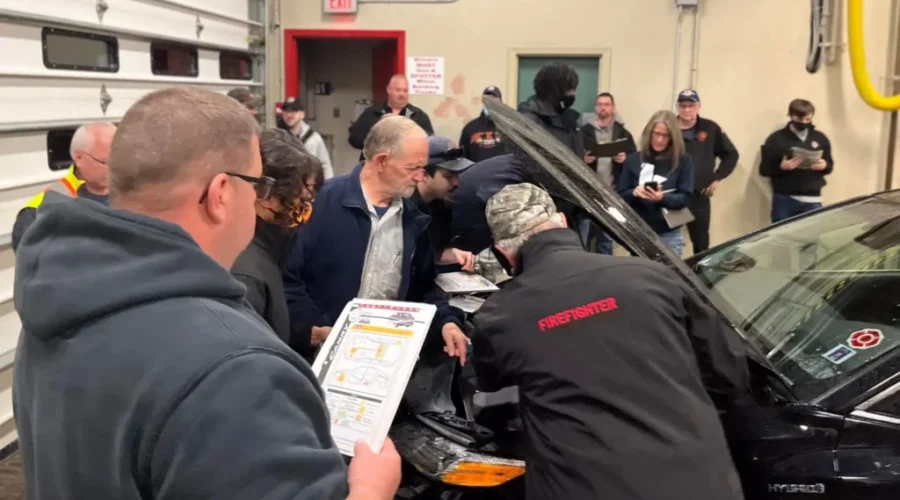
Firefighters in Bridgewater, N.S., learn about fires in electric vehicles. Photo: DCI
He says with manufacturer safety measures mitigating a significant amount of the risk of fires in EVs his program mainly focuses on developing standard shutdown procedures for fire departments so they are handling these vehicles as safely as possible.
Candy expects his schedule to remain full for the foreseeable future as more fire departments look to prepare for more EVs on the road.
“Eventually I would expect EV training to become a part of standard firefighter training across the country but until then I’ll keep on going with my courses, “Candy said.
Looking ahead Candy says he’s already seeing interest from American fire departments in training for hydrogen fuel cell vehicles which are currently seeing a rise in popularity in the United States, however, they remain very rare in Canada.