




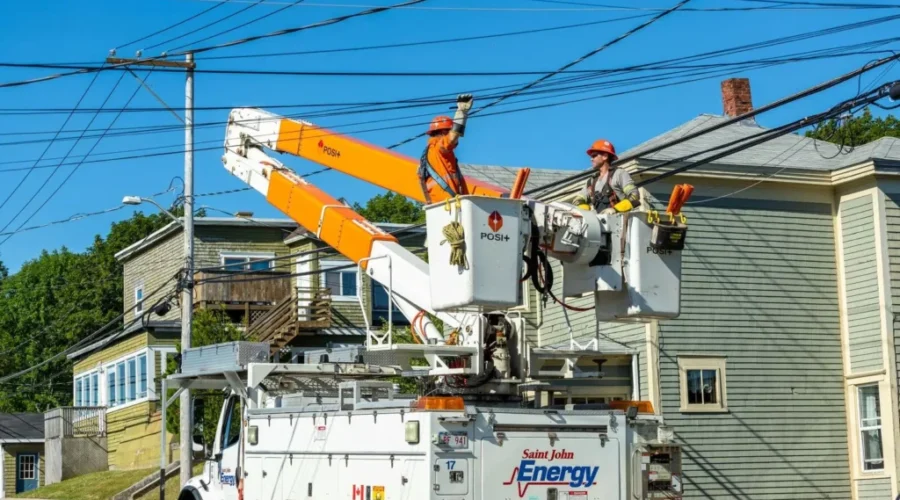
A new program through Saint John Energy will help residents save money on their electricity bill while also helping the environment.
The Home Heat Saver Program uses state-of-the-art thermal imaging to map heat losses from homes throughout the city.
Customers are now able to log on to their Saint John Energy accounts online to see a unique heat loss map for their home.
“Many people are now working and spending a lot more time at home, so increasing home comfort and reducing heat loss has never been more important,” said Ingrid Harris, manager of consumer products for Saint John Energy.
Harris said the program, which is the first-of-its-kind in Atlantic Canada, is perfect for Canada’s oldest incorporated city.
She said heating is a big expense for many of their customers each year and many of them struggle with heat loss.
“Nearly 40 per cent of Saint John homes were built before 1960 and most of these homes use electricity as their primary source of heat,” said Harris.

Image: SjEnergy.com
The heat loss map, produced by MyHEAT, is an aerial thermal image of a building which indicates potential heat loss areas. Red areas on the images are losing the most heat and blue areas are losing the least.
Based on the amount of heat escaping the home, customers will also receive a heat loss score and will be able to compare their score to the city and neighbourhood average.
“We’ll connect those with high heat loss score with rebate programs, efficiency services and innovative products to help them conserve energy, save money on their power bill, and contribute to a greener Saint John,” said Harris.
The utility conducted a pilot project over the summer with more than 70 customers and Harris said they have already begun to see the impacts.
She said one-in-two discovered areas in their home using more heat than expected, three-in-five said they would consider home energy upgrades, and nine-in-10 said they would consider having a home energy evaluation.
The program is a partnership with Natural Resources Canada, the University of New Brunswick and Calgary startup MyHEAT. The federal government contributed just over $326,000 to the project.