





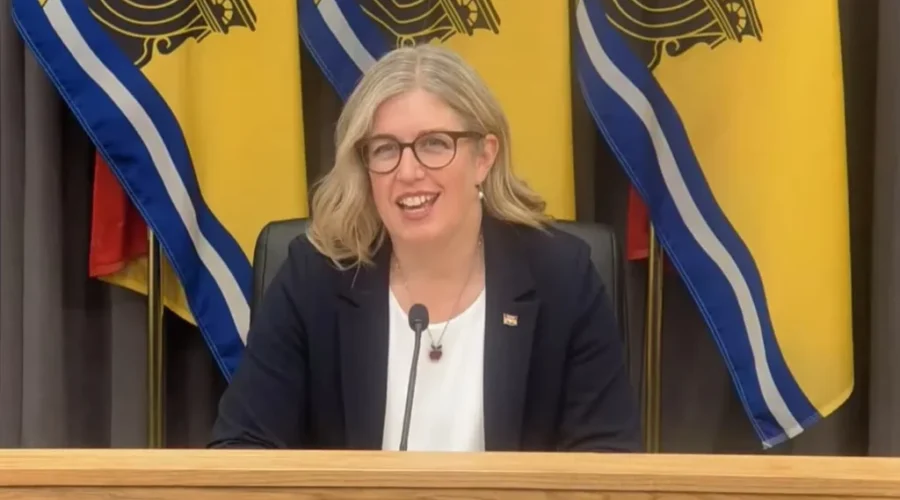
With the fall sitting of the New Brunswick legislature set to begin, Premier Susan Holt says her government is ready to shift from laying foundations to delivering results.
Holt said her team is focused on priorities raised by New Brunswickers, including health care, affordability, education and housing.
“The legislature is a place where 49 elected representatives of New Brunswick are bringing forward what their constituents need and want,” Holt said.
“We focus our agenda on what New Brunswickers tell us they need most and what requires legislative change to advance.”
Legislative priorities
Holt said the first bill of the session will address the independence of the province’s Chief Medical Officer of Health.
The proposed legislation would change how the position is appointed and removed, and require annual public reporting to the legislature.
She said more bills are expected this fall compared to last year’s session, with additional legislation planned for the winter and spring.
Holt added that part of the challenge is balancing routine updates with larger reforms.
“It’s a constant effort of focusing our time and energy on the right things and then also getting done some things that just need to get done,” she said.
Holt noted that many older acts still need to be modernized, but she does not want that work to take away from the bigger changes New Brunswickers are waiting for.
Finances and public services
On finances, Holt acknowledged her government will not deliver a balanced budget this year, despite a campaign promise to do so annually.
“I don’t foresee a balanced budget tomorrow,” she said.
“But we are constantly wanting to get there and making sure that we’re making the decisions that will get us there as quickly as possible while delivering New Brunswickers what they need and deserve right now.”
Holt said global economic conditions have worsened since her government took office, citing U.S. tariffs on steel, aluminum and softwood lumber as a major challenge.
She said softwood tariffs alone have reached 45 per cent and could reduce the province’s GDP by half a percentage point, putting more than a thousand jobs at risk.
Despite the fiscal strain, Holt said her government will continue to support health care, housing and affordability.
She pointed to rent caps, electricity rebates, expanded breakfast programs in schools and wage increases for early childhood educators and support workers as examples.
On health care, Holt said more than 10,000 people have been connected to family health teams over the past year.
Seven new teams have opened in Fredericton, Lamèque, Tantramar, Carleton North, Miramichi, Campbellton and Moncton, with three more expected in 2025.
She also cited progress on recruitment, noting that 47 specialists were hired between April and August in the Horizon Health Network.
Holt said her team is seeing more interest from U.S. doctors and is working to expand medical school seats and support collaborative care models.
Education, language and energy
In education, Holt said the government is focused on stabilizing classrooms and improving student outcomes.
She acknowledged mixed results from a pilot project in the francophone school system and said further analysis is underway before expanding it.
Holt also addressed concerns about bilingual service thresholds under the Official Languages Act, saying any changes would need to apply to both linguistic communities.
She said her government is open to discussions but has not received a formal proposal.
On energy, Holt said “status quo is not an option” for NB Power and that reforms are needed to ensure stable, affordable and sustainable service.
She confirmed the government is reviewing the environmental impact assessment process for a proposed gas plant near Centre Village, following concerns raised by Tantramar town council and local First Nations.