




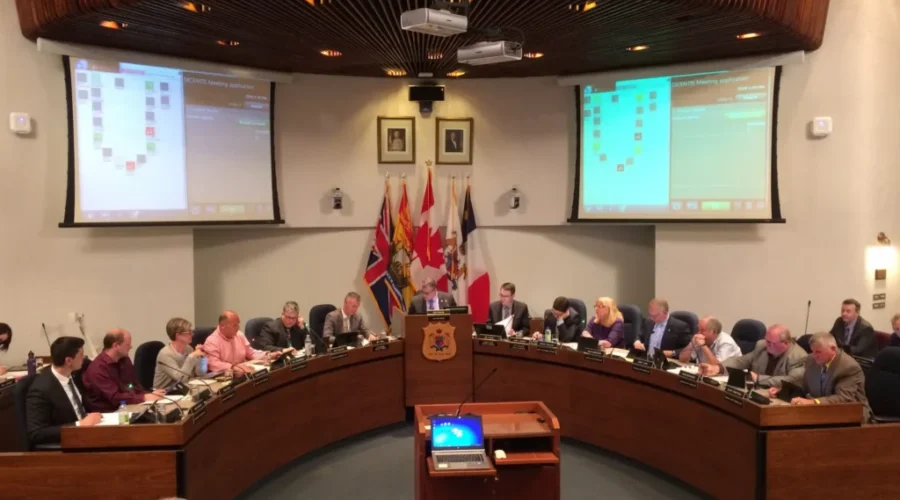
Balancing efficient goods movement and quality of life for residents is the goal of a new strategy presented to Common Council on Tuesday night.
The draft Goods Movement Strategy has more than a dozen policy options that could be implemented over the next few years.
It suggests eliminating four truck routes in residential areas, including Churchill Boulevard and Foster Thurston Drive, but that would push more truck traffic onto nearby streets that also have residential properties.
Council hearing MoveSJ Goods Movement Strategy. Short-term recommendations include eliminating Churchill Blvd./Foster Thurston Dr. truck routes, minimizing trucks in the South Central Peninsula. Longer term include eliminating truck routes in lower west, Harding St. West.
— Brad Perry (@BradMPerry) May 22, 2018
Councillor Donna Reardon doesn’t like the idea of removing the truck route from Foster Thurston Drive.
“That’s a commuter route, you might as well leave the trucks on it,” says Reardon. “If you want to drive more trucks onto Somerset, you’ve got a school right off Wellesley there at the bottom of Somerset Street, so you do have more walkers on Somerset Street.”
The strategy also looks at managing large truck deliveries in the South Central Peninsula by allowing 53-foot or larger trucks to only use the designated truck route to the Port of Saint John, reducing the number of loading zones for larger trucks, or limit times when larger trucks can make deliveries.
But the city’s Tim O’Reilly says that may significantly increase the cost of goods movement for businesses in that area.
Report also recommends getting truckers to use more modern highways (Highway 1, Martinon Bypass, Airport Arterial) more often and banning Jake brakes except in emergency situations.
— Brad Perry (@BradMPerry) May 22, 2018
Longer-term options include eliminating the Harding Street West and lower west truck routes — but only if council makes the Simms Corner reconstruction a priority.
Mayor Don Darling says it’s important for industry and citizens to coexist and he’s glad important questions are being raised.
“Why have we established certain truck routes in certain areas, how can we move goods in and out of certain areas safely, what data do we have, what data are we missing,” says Darling.
You can read the draft strategy for yourself by clicking here.