





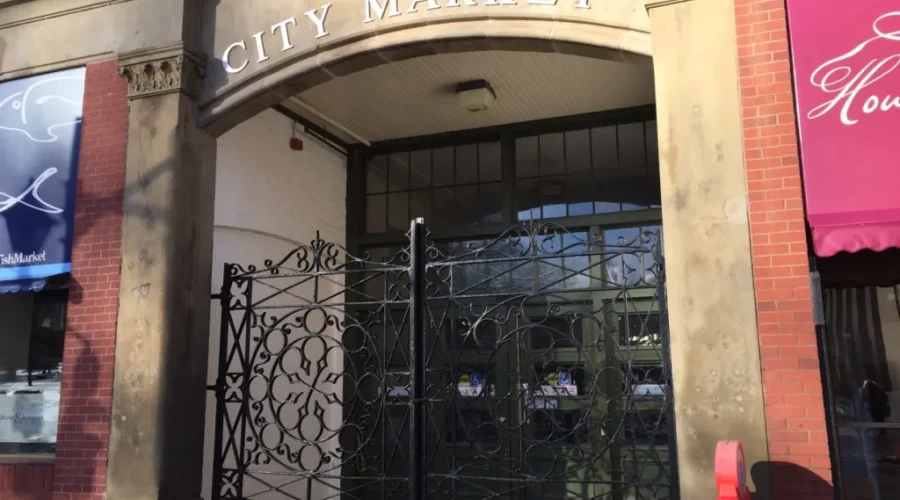
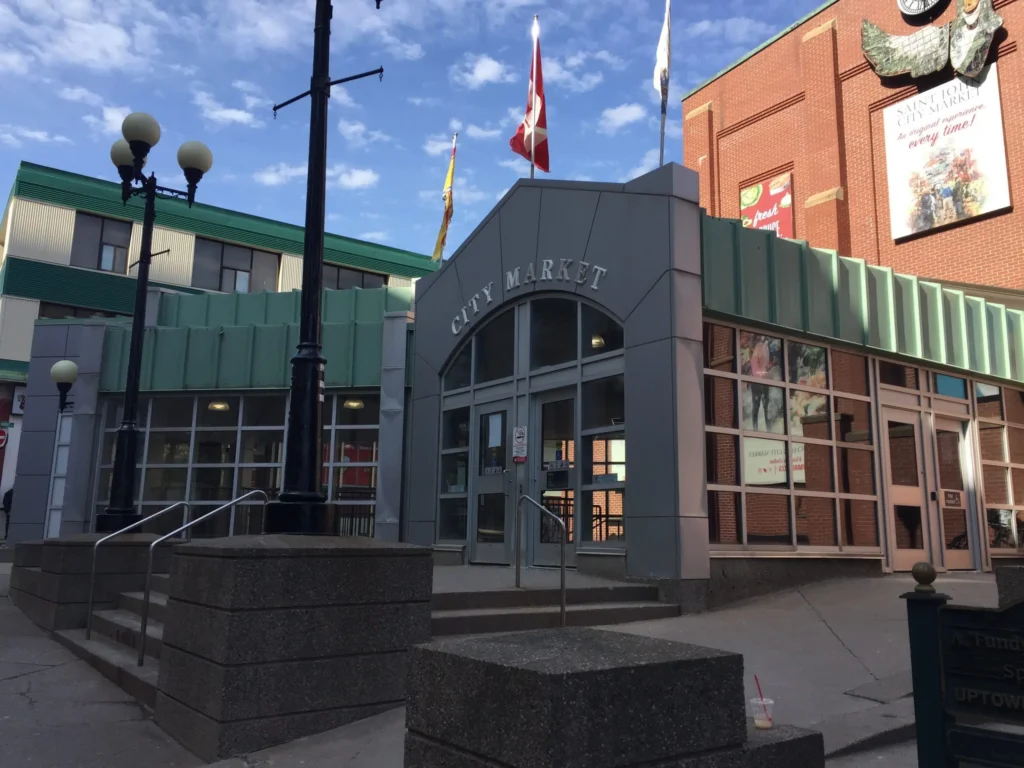
In 1874, the city decided it needed a centralized hub for its merchants. They held a contest, and architects McKean and Fairweather won with a design that paid the ultimate tribute to the city’s identity.
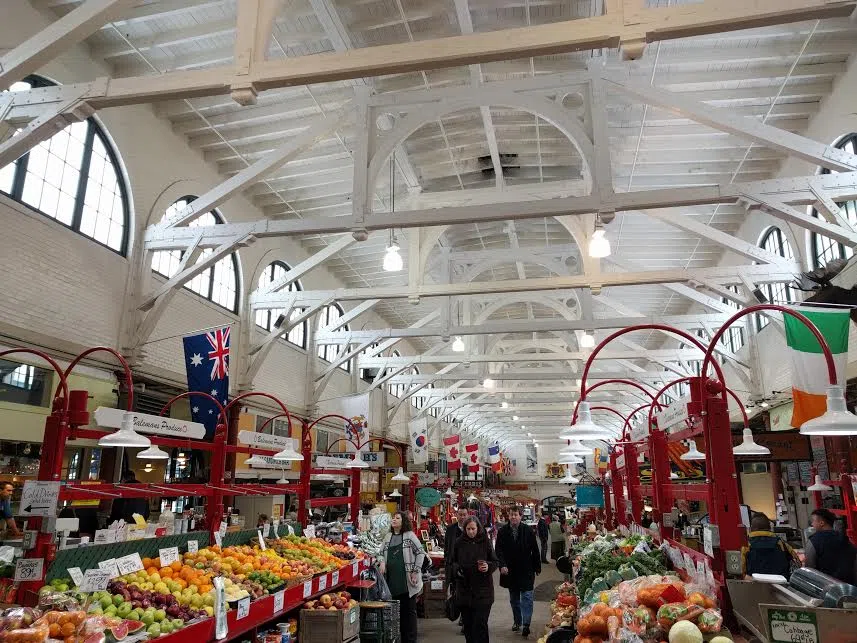
Because Saint John was home to some of the best shipwrights in the world, the city hired unemployed ship carpenters to build the roof. Using the same techniques they used to keep the Atlantic Ocean out of a ship’s belly, they built a massive, soaring ceiling of hand-hewn timbers and dove-tailed joints. When you stand in the center of the market today and look up, you aren’t just looking at a roof—you are looking at the inverted hull of a giant wooden ship.
The Miracle of 1877
The market officially opened in 1876. Just one year later, disaster struck.
On June 20, 1877, the Great Fire of Saint John tore through the city. It was one of the most devastating urban fires in North American history, destroying over 1,600 buildings and leaving 13,000 people homeless in just nine hours. The city’s business district was essentially erased.
Yet, in a twist of fate (and perhaps thanks to its sturdy brick walls), the City Market stood its ground. While the buildings all around it crumbled into ash, the Market remained untouched. It became a beacon of hope—the “resilient heart” where the city gathered to begin the long process of rebuilding.