





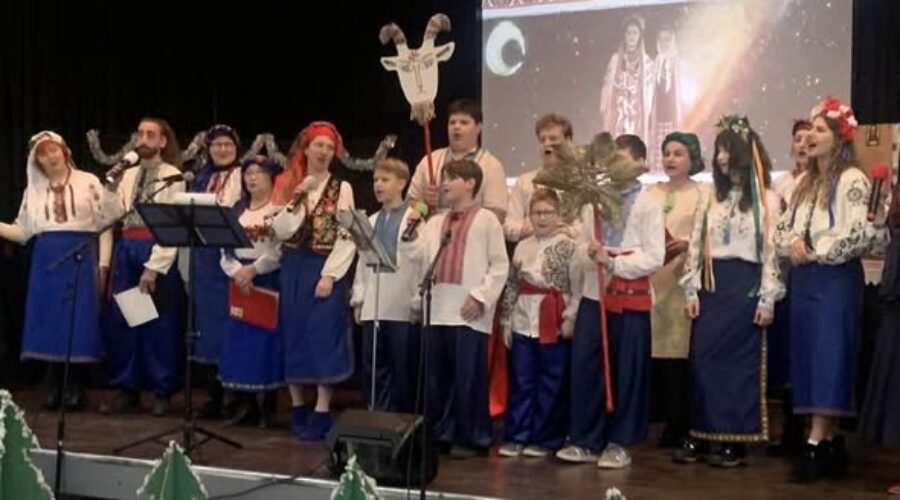
An unforgettable afternoon of celebration recently filled the Old Kent Theatre on Coburg Street as members of the Saint John Ukrainian Community LAB – DCR gathered to mark Shchedryk, one of the 12 days of Christmas. Music, tradition, and community spirit transformed the historic space into a place of warmth and remembrance, reminding everyone present of the deep cultural roots Ukrainians have carried with them across generations.
Canada is home to the third‑largest Ukrainian population in the world, a testament to the long history of Ukrainian migration and settlement. Ukraine itself, with a population of about 40 million people, is the second‑largest country in Europe by land mass, after Russia. Many Ukrainians who have arrived in Canada in recent years are not immigrants by choice, but refugees—forced to leave their homes due to Russia’s ongoing invasion of Ukraine. Their presence among us brings both grief and resilience, as well as a renewed appreciation for traditions like Shchedryk, which connect people to home during even the darkest times.
Canada’s own history is deeply intertwined with the refugee experience. The country’s first major wave of refugees were exiled Americans we now call Loyalists—people who lost their homes, livelihoods, and communities after the American Revolution (1775–1783). The single largest group of these displaced Loyalists arrived in Saint John, New Brunswick, near the end of the eight‑year conflict, reshaping the city forever. Their story is a reminder that Canada itself was built, in part, by those who had nowhere else to go.
Today, millions of people around the world continue to be forced from their homes by war, famine, political persecution, and climate change. While some refugee groups—such as Syrians, Cambodians, Palestinians (with the hope of a future two‑state solution), and Venezuelans—are beginning to return to their homelands, many others remain displaced. Ukrainians, Sudanese, and Iranians, facing conflict, unrest, and drought, are among those still searching for safety and stability.
Events like the Shchedryk celebration are more than cultural gatherings. They are acts of remembrance, resilience, and solidarity. They remind us that while borders may divide countries, shared human experiences—loss, hope, and the desire for peace—bind us together. In Saint John, a city shaped by refugees past and present, these celebrations echo a deeper truth: welcoming others is not just an act of kindness, but part of who we are.