




What are the interactions like between Wild Atlantic Salmon and salmon aquaculture?
That is the purpose behind a new pilot project in the Passamaquoddy Bay.
From the Saint Andrews Biological Station, Dr. Marc Trudel tells us about the project, “We are putting small tags in [wild] salmon and it sends a signal every twenty to forty seconds. We have put a series of receivers in the Passamaquoddy Bay and also at active and inactive farm sites. So when the salmon that have the tag go nearby the sites with receivers, it will be picked up by the receivers and will tell us if the fish indeed went near a salmon farm or not.”
Dr. Trudel says the whole reason behind the project is concern over disease. “There are some concerns from both the aquaculture and the wild salmon perspective. On the one hand, there’s the concern for the potential of disease transfer from wild salmon to salmon aquaculture. Also, for the potential of the transfer of disease from aquaculture to wild salmon.”
He says this project is the first step in understanding to what extent those interactions occur, and how significant they are.
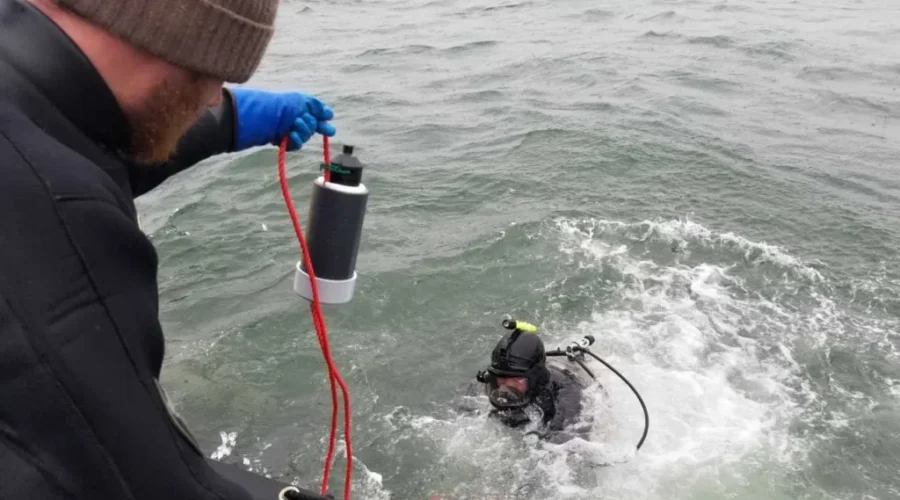
The St. Andrews Biological Station launching a new pilot project to track Wild Atlantic Salmon and their interactions with farmed salmon.
Here’s Dr. Marc Trudel releasing the fish into the Passamaquoddy Bay. #981news #charlottefm pic.twitter.com/fL920p5Rj5— @981News (@981news) June 15, 2018
Dr. Trudel says the tags are battery-powered, and each one has it’s own unique code so they can trace each individual fish. He describes it as similar to a bar code for each fish. Dr. Trudel says this project will be a fairly short one.
” We released the first fish on May 25th [2018], and the last of the fish were released on June 6th. We’re going to keep tracking them in the bay, here, up until late June or early July. At that point we think the fish will be gone. With that being said, there are some receivers that the Ocean Tracking Network have put near Halifax. If the fish survive to that point, it could be picked up by the receiver in Halifax. So again, additional knowledge in terms of their survival and migration rates in the ocean.”
The pilot project is being conducted at the Saint Andrews Biological Station in collaboration with a series of groups such as Noa Fisheries, the aquaculture industry through the Atlantic Canada Fish Farmers Association, the Ocean Tracking Network, the Atlantic Salmon Federation, and other researchers within the Department of Fisheries and Oceans.